
Floyd County Warrant Checks
The Floyd County Sheriff's Office posts no public name-search list of warrants. So the practical route starts with Virginia's public case system for adult criminal and traffic matters. Find the court named on the paper, then call its clerk. A docket can show a case while leaving current process details off the screen, which is why the phone call matters. When you search, use your full name as printed on a summons. Add the case or citation number and hearing date if you have them. Felonies belong to Circuit Court. Traffic and adult misdemeanors start with General District Court, where Floyd County cases are docketed. Ask the clerk directly whether a warrant, capias, or show-cause summons was issued, returned, or recalled.
- Search the Virginia Online Case Information System by Floyd locality, using the name on the court paper, case number, or hearing date.
- Use the General District Court case and payment system for eligible traffic or criminal cases; a payment result is not a warrant clearance.
- Call Room 208 for GDC or JDR records, or Room 200 for Circuit Court felony and circuit records.
- Call the Sheriff's Office for a service question. Its public page has no warrant lookup or direct warrant-unit line.
- If an existing record is not available, send a specific Virginia FOIA request to the office that holds it. Ask a lawyer about next steps.
Floyd County Search Has Limits
The statewide service has firm limits. It is a case-information system, not a complete warrant database. Coverage runs to adult criminal cases in JDR, criminal and traffic cases in General District Court, and selected Circuit Court cases, but the public gets no access to VCIN or NCIC. Juvenile case details stay closed too. The official Virginia case-search screen lets you pick a court or locality and search by name, case number, or hearing date where offered. A match helps you identify the case and its next hearing. An empty result proves nothing, since the system does not certify that no warrant exists. For Floyd County, this screen is the statewide criminal and traffic case-information entry point. Its controls locate a court case, but current warrant status belongs to the issuing court or serving agency.
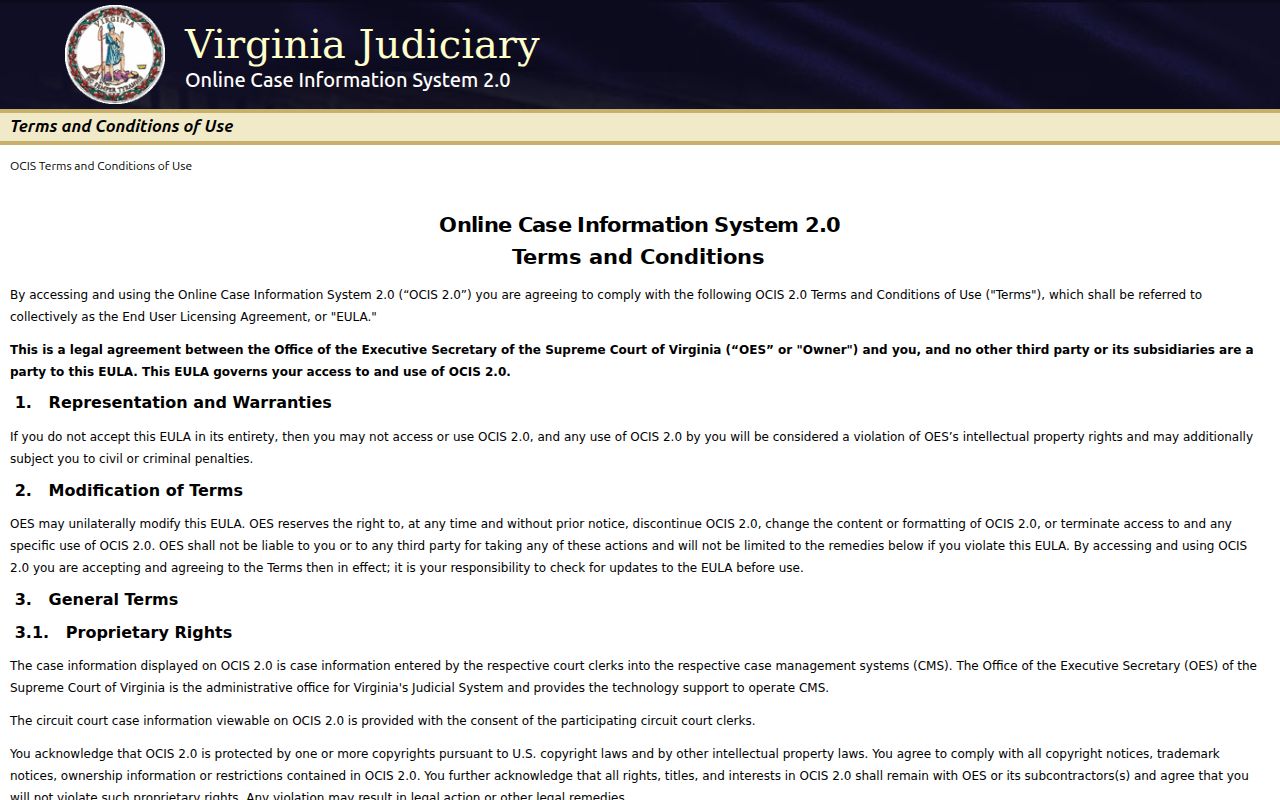
Once you find a match in a Floyd County case, write down the court and case number before calling the clerk. If the matter is traffic or an adult misdemeanor, repeat the search in the local GDC system as well.
Warrants in Floyd County: The Main Types
More than one kind of paper can put a person in custody, before a judge, or subject to a search. Virginia law lets the issuing judicial officer pick the process, and the word on the paper controls what it does. Floyd County case information may reveal the underlying case. The label matters most.
| Warrant Type | How It Arises | Who Issues It |
|---|---|---|
| Arrest warrant | Sworn complaint and probable cause for an offense | Magistrate or authorized judicial officer |
| Bench warrant / capias | Missed appearance or failure to obey a court order | Issuing court or judge |
| Search warrant | Probable cause to search a named place, item, or person | Judge, magistrate, or authorized officer |
| Show-cause summons | Order to appear and explain alleged noncompliance | GDC, JDR, or Circuit Court as applicable |
Floyd County Courts Hold Different Files
One building in Floyd County holds both clerk offices. The combined General District and JDR clerk sits in Room 208, while the Circuit Court clerk works out of Room 200. Traffic tickets, adult misdemeanors, preliminary hearings, and many domestic matters route through the district clerk. Felony trials, circuit criminal records, and circuit capiases go to the Circuit clerk. There is no separate Town of Floyd municipal court or justice-of-the-peace court in Virginia, and the town's planning document says police protection comes from the county sheriff. A town ordinance matter still follows the standard Virginia court process, so the same Floyd County clerks handle it.
Floyd County Warrant Records: What They Show
Virginia court forms spell out the fields a paper record may carry. The public case result can show less than the warrant itself or its return. Floyd County publishes no warrant-number format or status-code key. Use the exact number printed on the court paper.
| Case number | Use the number on the court paper; Floyd has no published warrant-number pattern. |
|---|---|
| Charge | Offense date, code section, offense description, and a state or local classification may appear. |
| Issuing court | Court type, locality, return court, and issuing officer or judicial-officer signature. |
| Service and return | Execution or service date, officer, agency, and return information when recorded. |
| Bond | Conditions may be shown. No fixed Floyd County bond schedule was located. |
| Status | Issued, served, returned, recalled, quashed, or destroyed are distinct process events. |
Virginia Forms Separate Warrant Types
District Court forms draw sharp lines between process types. The set covers felony arrest warrants, state misdemeanors, local misdemeanors, and capias process. A local misdemeanor form can carry an ordinance reference next to its Virginia Code link. A capias may point to a missed appearance, missed payment, support arrears, or another order violation. The Virginia criminal forms index and its instructions describe record fields, not real Floyd cases. Remember that a charge's status is separate from whether a warrant was served or recalled, so ask the clerk to confirm the process itself. For search-warrant files, the Circuit Court clerk in Floyd County is the filing route under Virginia law. The General District Court public case search is not a complete index of search-warrant affidits.
Floyd County Warrants: Who Issues, Who Serves
Magistrates and judges hold the pen on judicial process in Floyd County. Clerks prepare the paperwork and keep the court record. The sheriff is the main local contact for service questions, though the Sheriff's Office publishes no warrant division or direct warrant line.
Floyd County Sheriff's Office
100 East Main Street, Room 206
Floyd, VA 24091
(540) 745-9334
Weekdays, 8:00 a.m. to 4:30 p.m.
Three Floyd County Offices Share One Courthouse
The Floyd County courthouse puts everything on one map. Circuit clerk: Room 200. Combined GDC/JDR clerk: Room 208. Sheriff's Office: Room 206. The building stands at 100 East Main Street in Floyd, and each desk handles a different slice of the process, so the room numbers matter. The county's government page shows the public building and the local office structure. A clerk can explain the docket or the filing route; the sheriff can field a service question. Neither office can promise that a process will be recalled, because only court action can do that. The Floyd County government page identifies the offices and public building behind these contact routes.
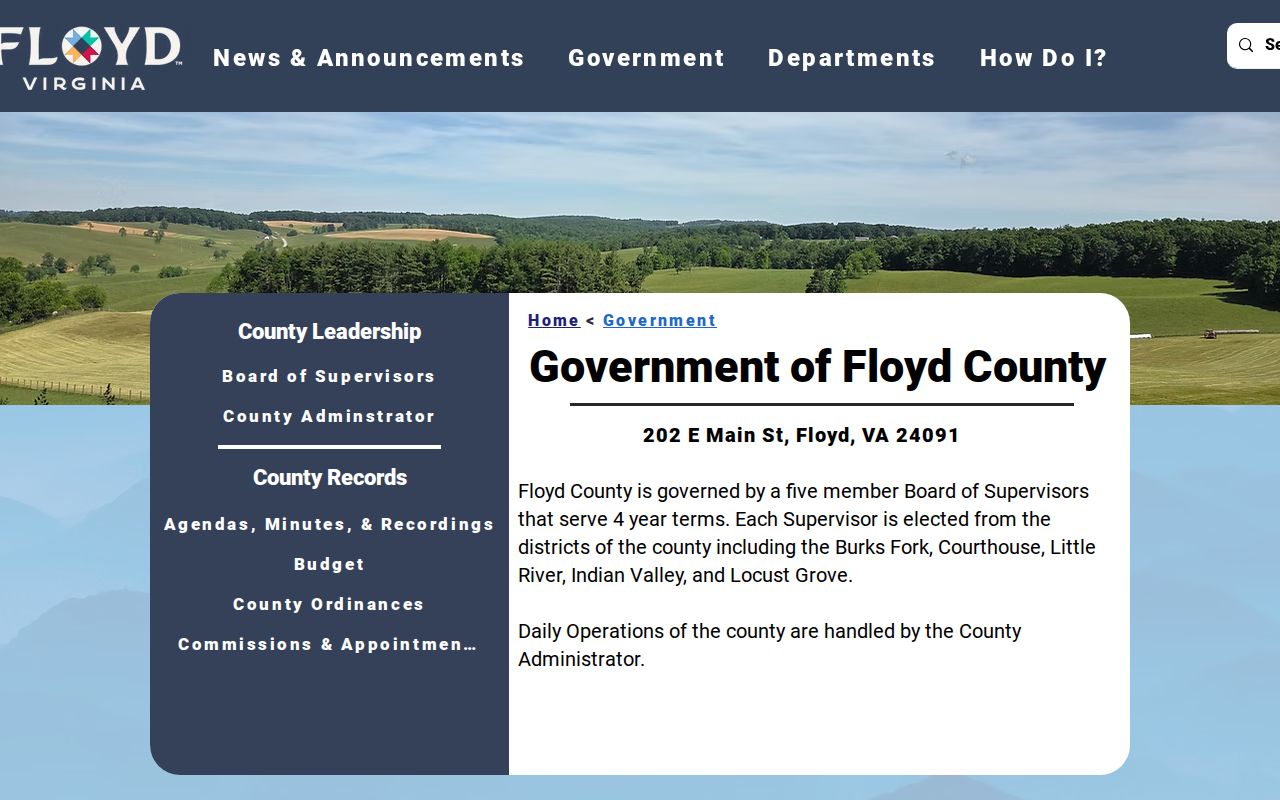
Call ahead before traveling to ask about surrender, bond, or an in-person record in Floyd County. No office here publishes a warrant counter or an after-hours bond window.
Floyd County Courts Follow Different Calendars
Floyd County runs its combined court on a split weekly calendar. General District traffic and criminal matters land on Thursday. JDR criminal and arraignment matters come up Wednesday, and support plus child-support-enforcement cases add the first Wednesday every other month. Circuit Court holds Tuesday settings and quarterly terms. So match a missed date to the exact court, not to a general search result. The combined court page and the Circuit Court page publish the current local calendar and the contact route for whichever bench set your hearing.
Handling a Floyd County Warrant
A case result or court paper that mentions a warrant, capias, or show-cause process is only the start. First pin down the court and the case number. Then ask the clerk whether a judge has set a hearing, whether a motion or an attorney appearance is needed, and whether the sheriff handles service. Showing up in person does not by itself guarantee recall or release. Virginia sets bail case by case, and Floyd County publishes no fixed bond schedule, no jail bond window, and no voluntary-surrender procedure. A lawyer can help arrange a planned appearance, negotiate bond terms, or move the court to recall or quash the process. Whatever the outcome in Floyd County, get it in writing or on the docket after the judge acts. That written confirmation is what protects you on the next contact with law enforcement.
Important: Call the issuing clerk and sheriff before appearing. Ask where to report and what process is in place; no Floyd walk-in surrender hours are published.
Payment Does Not Confirm Recall
Paying money is not the same as clearing paper. A payment may satisfy a fine or cost while a separate capias or warrant stays open. Floyd General District Court links to its local payment policy, but the policy file is a PDF that is not machine-readable, so call the Room 208 clerk for current deferred or installment terms. Ask whether a judge must still act on the process. Keep the receipt. Then confirm the warrant or capias status with the issuing court, because the state payment system updates payment records nightly and that update is no guarantee that law-enforcement data changed at the same time. Floyd County drivers should also know that unpaid fines and costs alone have not supported court-ordered license suspensions since July 1, 2019. Other suspension routes can still apply.
Warrant Record Access Under Virginia Law
Virginia FOIA opens many existing public records. It does not make every warrant file public. Floyd County asks that a request name an existing record with reasonable specificity. You do not have to say "FOIA" or give a reason. The public body generally responds within five working days, though a lawful delay or exemption may apply.
Key Rules:
Virginia Code § 2.2-3704 covers requests, response timing, and actual-cost charges.
Virginia Code § 2.2-3706.1 limits access to criminal-investigative files.
Virginia Code § 16.1-301 restricts public access to juvenile law-enforcement records.
Virginia Code § 19.2-54 gives search-warrant affidavits a separate release rule, with a sealing exception.
Floyd County Courts Warn About Payment Scams
Scammers work the warrant angle hard. If someone calls claiming you have a Floyd County warrant and demands immediate money, do not pay from a number the caller gives you. Look up an official court or county number yourself. Virginia courts say they never demand gift cards, cryptocurrency, or payment-app transfers, and never threaten arrest unless the caller pays. Hang up. Then reach the clerk or sheriff through an independently found official number. The warning matters most when the caller claims to be a court employee. A sheriff's anonymous tip line takes tips, not personal case checks. For your own case in Floyd County, use Room 208, Room 200, or the Sheriff's Office main line. The Virginia court scam warning describes the common warrant-related payment demands, and it backs one simple rule: verify the call before any money moves.
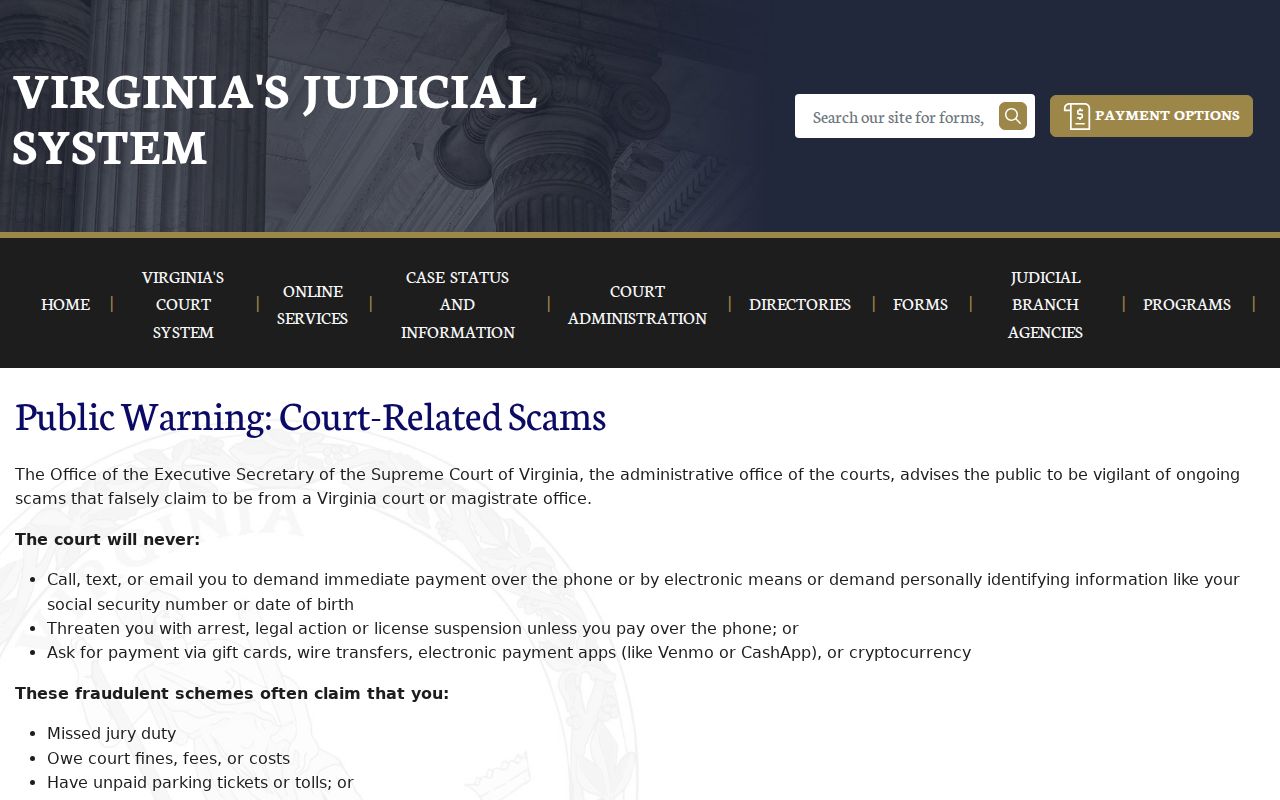
Never send funds to a caller who pressures you. Confirm any balance or court date with the Floyd County office that holds the case.
City Warrant Records in Floyd County
Floyd County contains just one incorporated town. The Town of Floyd gets police protection from the county sheriff, and no separate town police warrant page or municipal court portal exists. Any traffic or ordinance matter routes through the appropriate Virginia court. For a warrant check, the Floyd County offices above are the ones to call.
Town of Floyd Warrants
448 residents in 2020; county sheriff protection and Floyd General District Court.