
Floyd County Warrant Searches
There is no public name-search warrant portal on the official Floyd County Sheriff's Office page. The public starting point is the Virginia Online Case Information System for covered adult criminal and traffic cases. Use the court or locality selection, then verify the process with the clerk who keeps that case.
Have the name as it appears on the summons, case or citation number, and hearing date. Search by name, number, or date where the court interface allows it. If the result does not show a warrant field, call the clerk and ask whether a separate capias, warrant, or show-cause summons was issued or recalled.
- Open Virginia's statewide case search and select Floyd or the relevant court when the interface asks.
- Search the name as printed, or use the exact case number or hearing date if you have it.
- For a traffic or adult misdemeanor matter, also use the GDC case-information system.
- Call Room 208 for GDC/JDR or Room 200 for Circuit Court; ask about process status, not only case status.
- If an existing record is not online, send a specific FOIA request to the sheriff or clerk who holds it.
Floyd County Has No Sheriff Search Form
The sheriff's page publishes its office contact, policies, and anonymous tip line, but no warrant search form, active roster, or warrant-specific phone line. The main office number is (540) 745-9334 during weekday office hours. The tip line is a tip channel, not a personal case-check service.
For a service question, call the main office and ask which agency holds the process. For the court entry, contact the issuing clerk. The county's official sheriff page is the source for the public contact details.
Ask the clerk and sheriff separate questions when needed: the clerk holds the case record, while law enforcement can address service.
What a Warrant Search Asks For
The Virginia system searches court cases, not a Floyd County warrant roster. The local GDC interface supports a name, case number, or hearing-date search. Follow the fields shown by the court selected and copy the spelling from the summons or warrant.
| Field Label | Type | Required | Notes |
|---|---|---|---|
| Court / locality | Selection | For a local search | Choose Floyd GDC or the relevant Circuit Court scope. |
| Last name | Text | Name search | Use the spelling shown on the summons or warrant. |
| First and middle name | Text | Optional or part of name search | Include the middle name when known to narrow a match. |
| Case number | Text | Alternative | Enter the exact number from the court paper. |
| Hearing date | Date/search choice | Where offered | Use the date printed on the summons or docket notice. |
Use the Floyd Court Selector
The GDC interface separates court selection from search method. Pick Floyd General District Court, choose name, case number, or hearing date, and press Search. If an eligible case can be paid online, the Action column may show “Mark For Payment.” That action is not a warrant-status result.
The image below shows the official GDC search interface. Payment selection is available only in eligible cases; the statewide case search itself does not process payments.
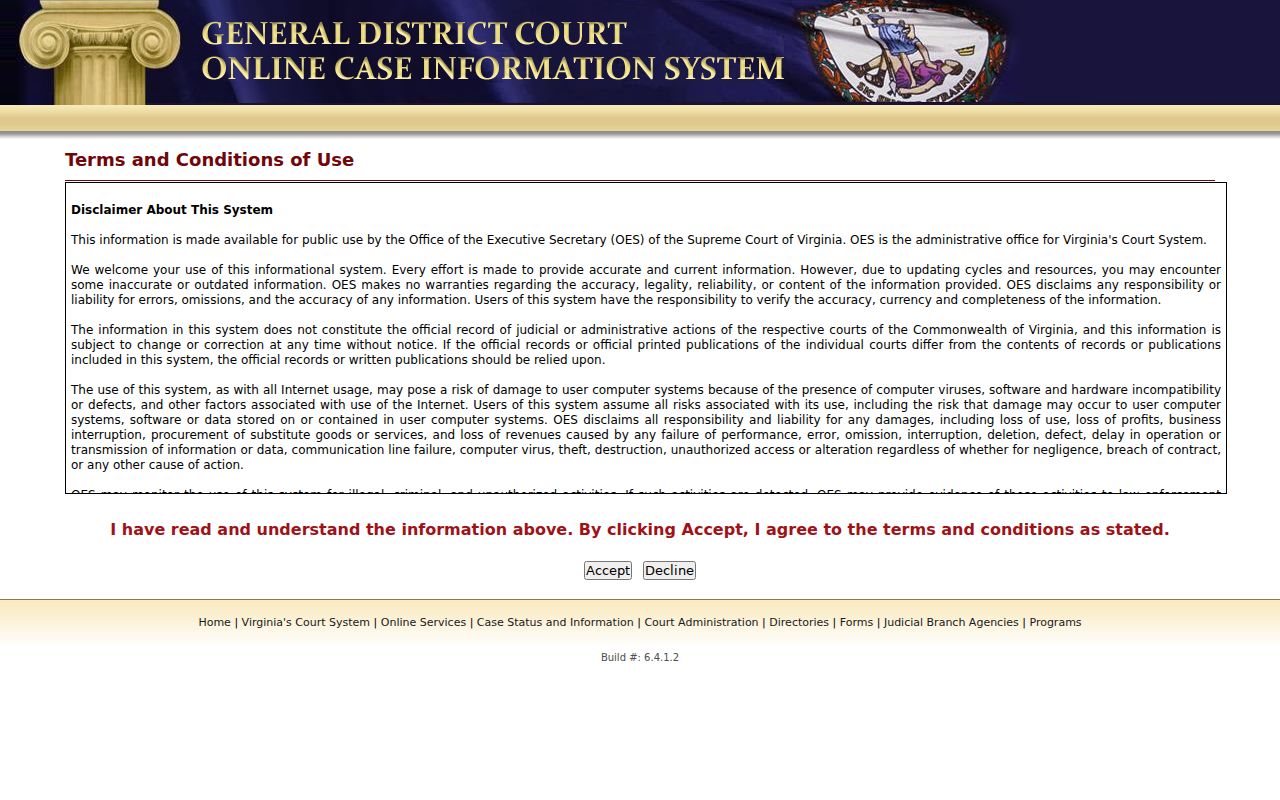
For a question about current process, use the court phone number instead of relying on a payment button or a blank result.
Floyd County Warrant Search Results
A public result may show a court, charge, case number, and hearing or case status. Virginia's standard forms contain more fields than a web result may display. Floyd County does not publish a warrant number pattern or a code key, so do not guess what a shortened status means.
| Case number | Use the exact court number; no Floyd warrant-number format is published. |
|---|---|
| Charge | Code section, offense date, and offense description may appear in the court file. |
| Issuing court | Shows which court or judicial officer handled the process. |
| Service | Execution date, serving officer, agency, or return may be separate from the case result. |
| Bond terms | Ask the clerk or magistrate; there is no published county schedule. |
Case Status and Warrant Status Differ
A case result is not the same as confirmation that a warrant remains executable. A matter may be open after process is recalled, or a case may show a disposition while service status is recorded elsewhere. The clerk can check the docket and tell you which office holds the process record.
The Virginia courts' case-information hub links several court-level searches. The image shows those separate entry points. If a result appears, save the case number and ask directly about issue date, service or return, and recall.
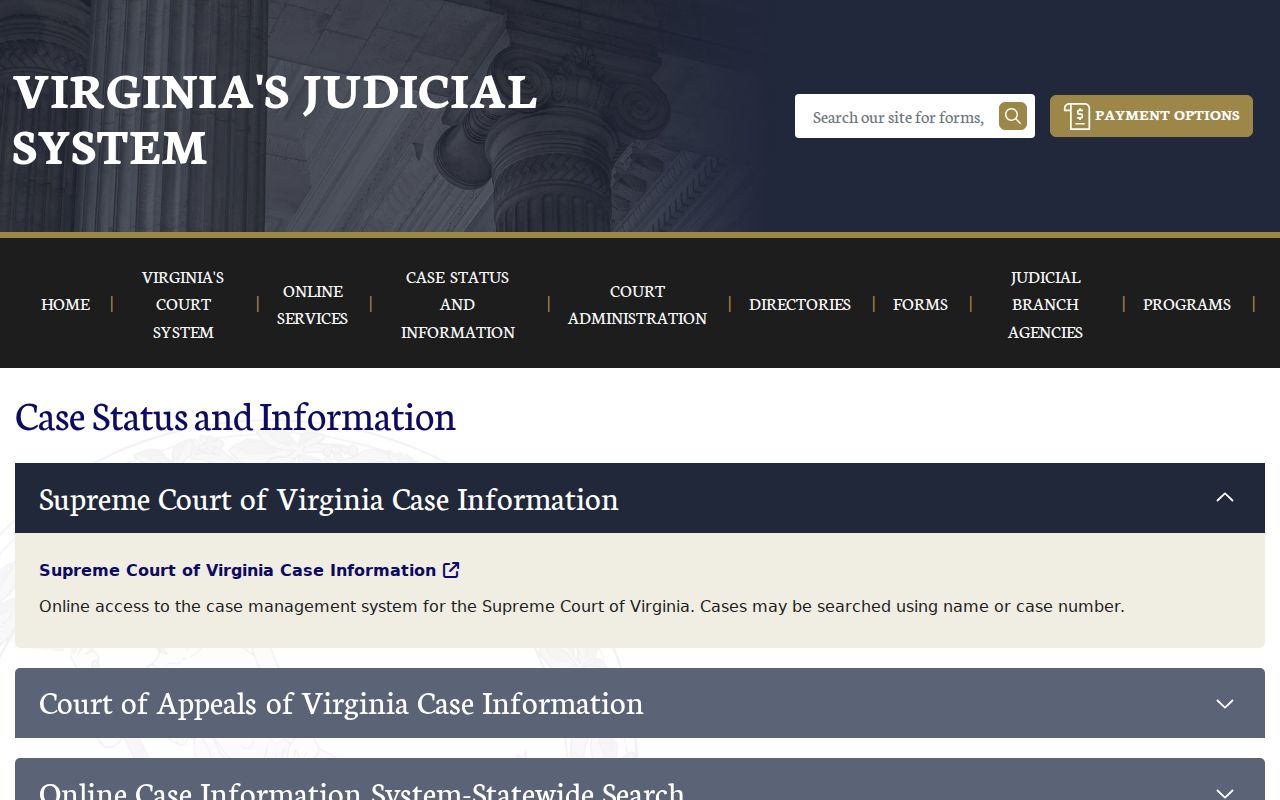
A blank result is also limited: juvenile, sealed, new, Circuit, or federal matters may not appear in the chosen public search.
Floyd County Warrants: Who Holds What
Room 208 is the General District and JDR clerk's office for traffic, adult misdemeanor, and family matters. Room 200 is the Circuit clerk's office for felony records, appeals, and circuit process. The Floyd County Sheriff's Office in Room 206 is the public service contact for county law-enforcement questions.
There is no Town of Floyd municipal court list or separate town police warrant portal in the official sources reviewed. Magistrate services issue process but do not publish a direct local warrant line. The state's VCIN/NCIC systems are for law-enforcement use, not public self-search.
Floyd County FOIA Reaches Existing Records
If a public search does not answer an existing-record question, Virginia FOIA allows a specific request to the office that holds the record. Floyd County accepts requests by mail, fax, email, phone, or in person. Name the case, date range, and record sought, such as a warrant entry or service return. A general question does not require the county to create a new certification.
The county's FOIA instructions identify the right route and explain cost estimates. The screenshot shows the public request information; a fee is based on actual search, staff, copy, or delivery cost rather than a fixed warrant lookup fee.
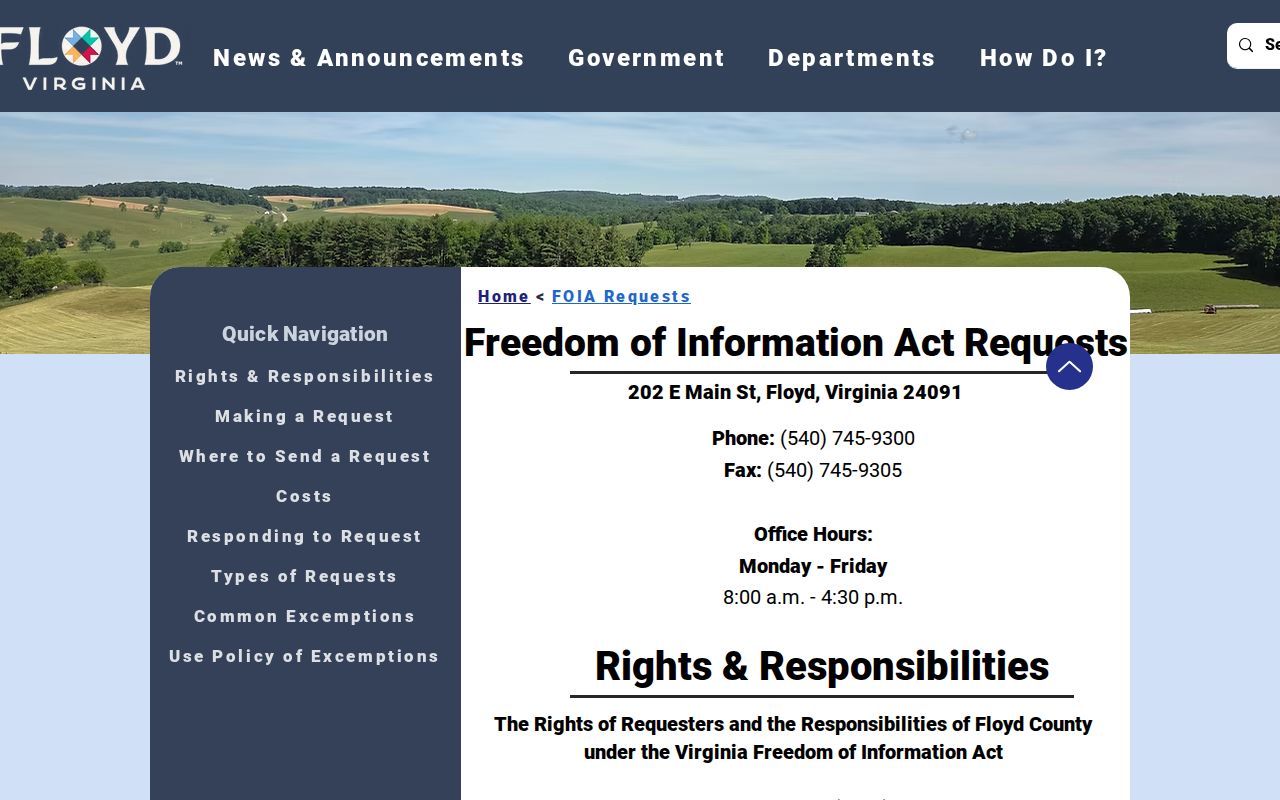
The Circuit and district clerks keep court records, so send court-file questions to the clerk rather than county administration.
Floyd County Search-Warrant Affidavits Have Their Own Route
A search-warrant affidavit is not an arrest-warrant lookup. Virginia law directs that affidavit to the Circuit clerk within seven days; public access generally begins after execution or 15 days, whichever comes first, unless the court seals the material for good cause. A person seeking a Floyd search-warrant file should ask the Circuit clerk about the filing and any sealing order. The access rule is set out in Virginia Code § 19.2-54.
Which Warrants Stay Restricted
Virginia FOIA provides access to existing records, but law-enforcement exemptions and court rules limit release. Ongoing criminal-investigative files are excluded from mandatory disclosure. Juvenile law-enforcement records and JDR case information have separate protections. A court may also seal search-warrant materials for good cause.
Key Rules:
Virginia Code § 2.2-3704 requires a reasonably specific request for an existing record and a response within five working days or notice of delay.
Section 2.2-3706.1 limits public access to investigative files; section 16.1-301 restricts juvenile law-enforcement records.
Section 19.2-54 addresses public access to search-warrant affidavits after execution or 15 days, whichever comes first, subject to sealing.
The image shows Virginia Code § 2.2-3704, which governs requests to public bodies. Its response rules do not erase access limits for juvenile, sealed, or investigative files.
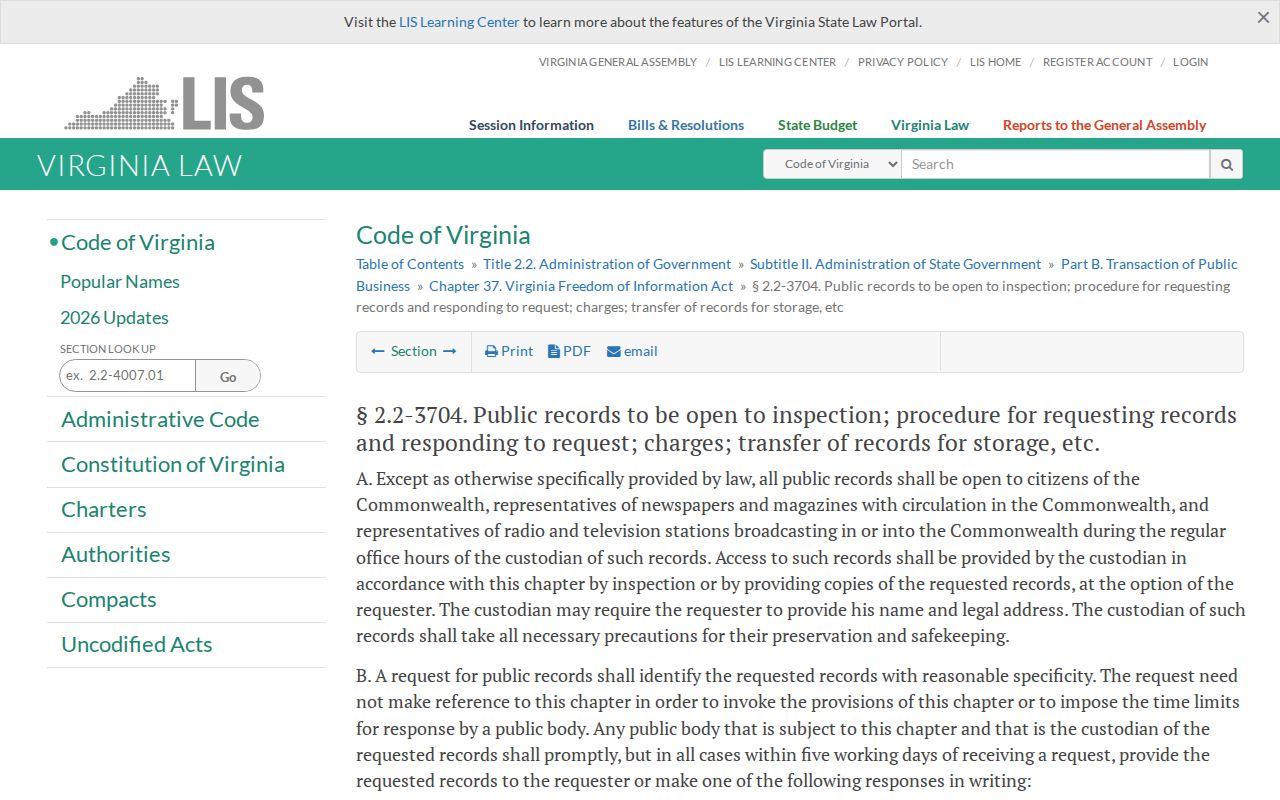
The statute sets request and response procedures for public bodies; it does not make every court or law-enforcement record open.