
Outstanding Warrants in Floyd County
Floyd County publishes no active-warrant search or outstanding-warrant roster on its county, sheriff, or Virginia court websites. That is a gap in public listings, not proof that no warrant exists. The Sheriff's Office posts contact details only. It offers no warrant lookup at all. In common usage, an "active" warrant is simply process a court has not recalled or quashed. Only the issuing court can confirm that status, while the serving agency can speak to execution. Online case entries often leave those process details out.
Floyd County Has No Public Warrant List
The Floyd County sheriff's page posts no search fields, no roster, and no update schedule. No warrant division or direct line appears either. For a service question, call the Sheriff's Office at (540) 745-9334 on weekdays. The anonymous tip number is not a personal status line. The sheriff's public page also covers services and technology policies. Its Flock Safety material concerns law-enforcement hotlist vehicle alerts, not a public warrant-name search. The county posts no amnesty event or roundup notice. Virginia Code § 19.2-76 governs how warrant or capias process is executed and returned. A return records an officer's action.
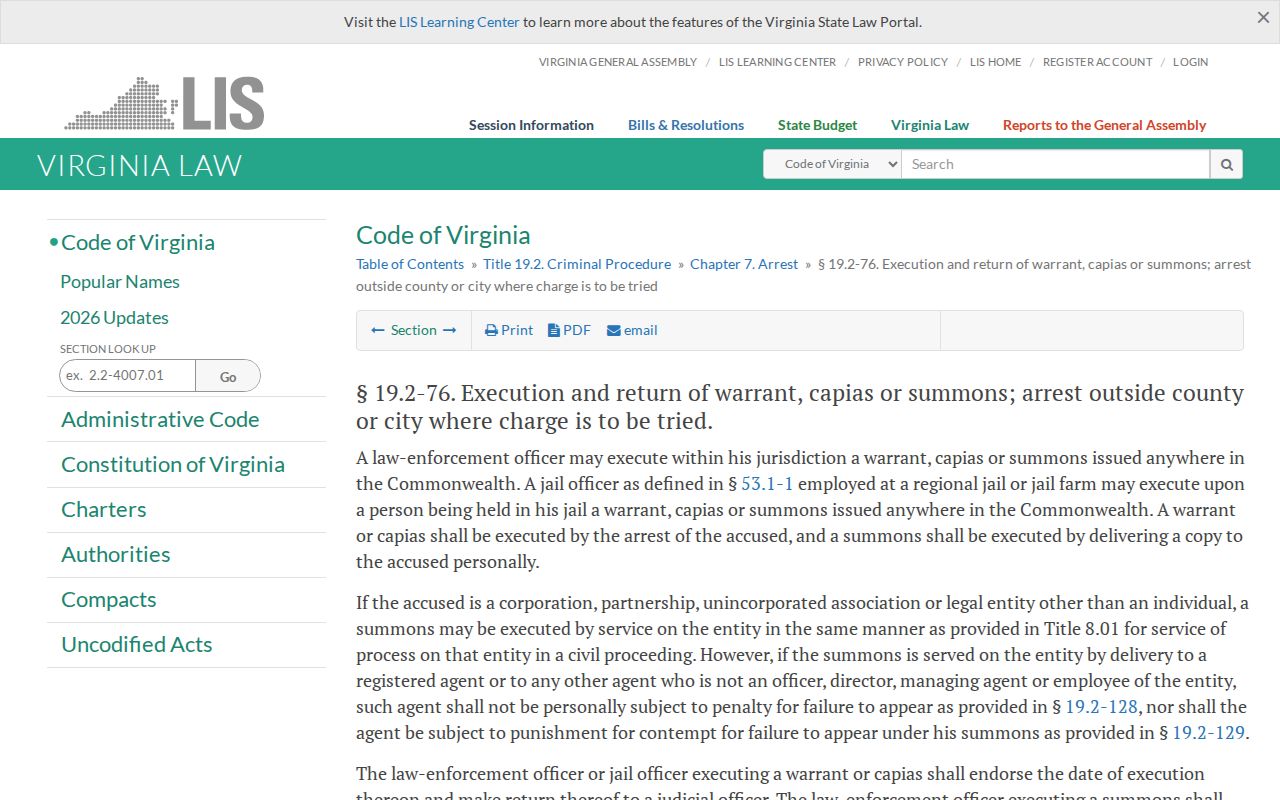
Virginia law channels execution and return through court process. A public web list is not the only record of a Floyd County warrant's status.
The Floyd County Active Warrant List
Floyd County has no official public warrant list to search or refresh. So there is no published schedule, count, or completeness note. The practical alternative is Virginia's court case system. Follow up with the clerk or the sheriff for the current process question. The statewide search covers adult criminal and traffic cases in specified courts. It is not a warrant database. A missing entry can reflect court scope, a sealed or juvenile record, a new filing, or a record held by another office. It does not prove a person is clear.
Note: No Floyd County warrant-list update schedule is published; verify current process status with the court or sheriff.
Floyd County Case and Warrant Records
In Floyd County, a case status and a warrant status can move on separate tracks. An open case may hold a recalled capias. A disposed case may still leave warrant questions for the clerk to confirm. "Returned," "recalled," and "quashed" name three different events. Virginia Code § 19.2-76.1 requires periodic review of certain old unexecuted process and allows court-ordered destruction in defined cases. A public docket may skip such details.
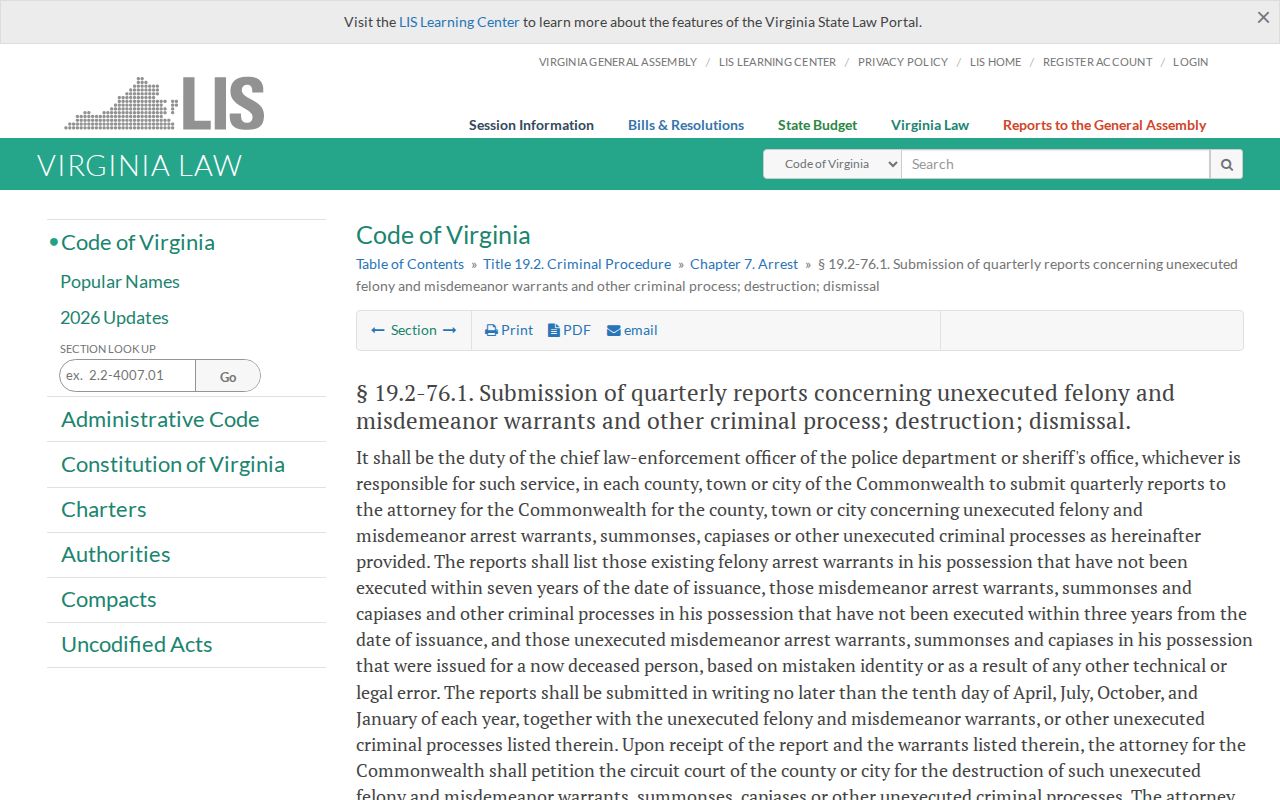
Virginia requires periodic review of old process. Courts may order destruction in defined cases, but age alone does not prove a Floyd County warrant is recalled or expired.
Floyd County Warrants Are Not Public VCIN Searches
Magistrate warrants enter VCIN/NCIC through the e-Magistrate process. Those systems stay closed to public self-search. The Virginia State Police describes VCIN as a system for authorized criminal-justice use. No resident can pull an active-warrant roster through it. The public court case search is separate. It also has narrower case coverage. Use a court paper to identify the clerk, then ask the serving agency about execution status. The Virginia State Police CCRE and VCIN information page explains who may use those systems.
Active Warrants: What They Show
Virginia forms show what a court process may list, but Floyd County publishes no warrant entries to compare. Do not borrow a number pattern or bond amount from another county's screen. Details differ by locality. Ask the clerk to identify the document and its case.
| Case number | Copy from the official court paper; Floyd's warrant format is not published. |
|---|---|
| Offense | Code, description, court, date, and case linkage may appear on the underlying form. |
| Service | Officer or agency, execution time, and return may be recorded separately. |
| Reason | A capias may cite a missed date, payment, support, or another order. |
| Release terms | Case-specific bail or conditions; no county-wide fixed schedule was located. |
Floyd County Warrant Status Terms
Virginia forms and rules recognize several process outcomes. "Issued" means a judicial officer created the warrant; "served" or "executed" means an officer carried it out. "Returned" means the officer reported back to court. "Recalled" means the issuing court withdrew it, while "quashed" means a court set it aside. Floyd County clerks use these same terms.
- Outstanding
- Plain-language term for process that may still be executable; not a published Floyd status code.
- Disposed
- A case outcome that does not by itself prove the separate warrant was cleared.
- Destroyed
- Court-ordered treatment for certain old unexecuted process under Virginia law, not an automatic time limit.
Ask the clerk to confirm the exact docket entry and its effective date. Floyd County publishes no local code dictionary.
Floyd County Warrant Roundups
Floyd County runs no official most-wanted program, warrant roundup, amnesty event, or reward schedule. The Sheriff's Office does publish an anonymous tip line at (540) 745-9395. It links to no warrant roster. The office states no reward policy either.
Key Point: Floyd County publishes no official public warrant roster. The Sheriff's Office page gives the right county contact, not a list of names.
Any current status question belongs with the issuing clerk and sheriff. Do not rely on an unofficial roster or repost names from one.
Some Floyd County Files Stay Private
Juvenile files work differently in Floyd County. Records that involve minors stay closed to the general public, and JDR cases never show up in the online case search. Virginia law draws that line, limiting access by statute. So a quiet search result does not mean no record exists. A parent, guardian, or attorney with standing should ask the clerk directly what the rules allow them to see. Virginia's juvenile-record law sets out those limits on access.
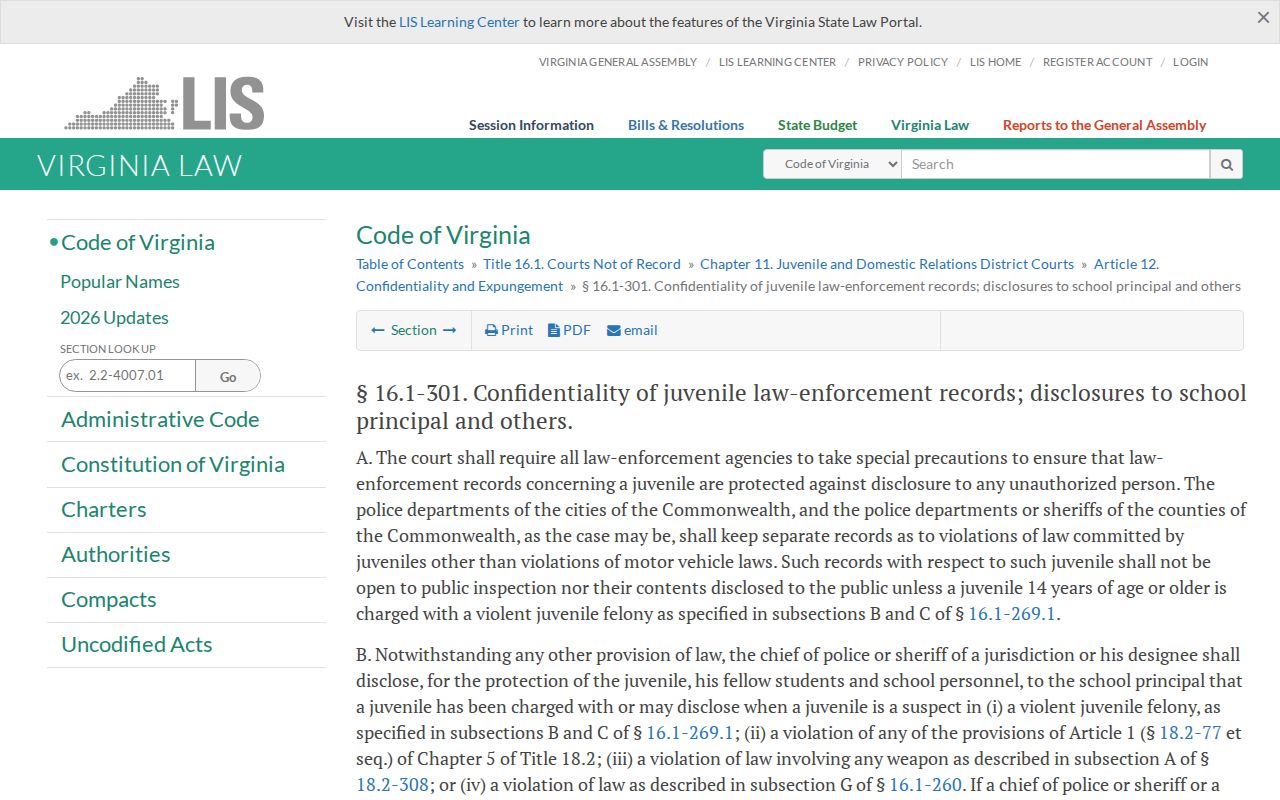
For other Floyd County court records, a narrow request works best. Ask the clerk for a specific docket or service record, keeping in mind that sealed and investigative files stay off limits.
Finding Your Own Name on the List
Floyd County publishes no public warrant list, so work from a case number or paper document instead. Call the right clerk. Ask whether process was issued, served, returned, or recalled, whether a judge has set bond or a hearing, and what comes next. A docket entry alone will not answer all of that. For a General District or JDR matter, call Room 208; for Circuit criminal process, call Room 200. The sheriff's office can sort out a service question. A lawyer can arrange a court appearance or a motion on your behalf. Note that Floyd County has posted no walk-in surrender procedure and no fixed bond schedule, so ask the court what applies.
Important: Speak with a lawyer and call the issuing clerk before appearing. Confirm where to report, whether bond is set, and whether the sheriff must be contacted.