
How Arrest Warrants Work in Floyd County
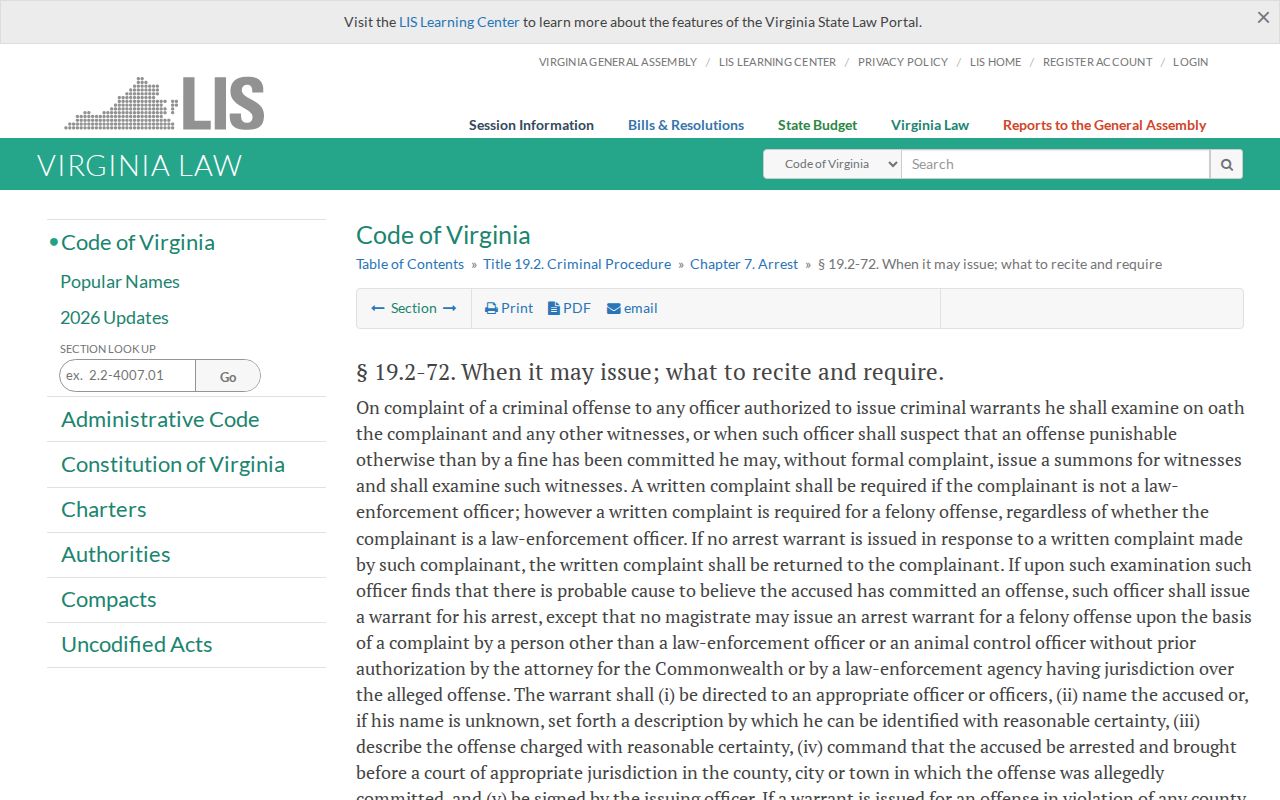
Every Floyd County arrest warrant starts with a complaint accusing someone of a crime. A magistrate questions everyone under oath. Nothing issues without probable cause. When the officer finds cause, the warrant issues. It names the accused or a description certain enough, and it states the offense charged. The complaint must be written for a felony. A private person seeking a felony warrant generally needs prior authorization from the Commonwealth's Attorney or law enforcement. The order then directs an appropriate officer to arrest the accused and bring the person before the court.
Floyd County Probable-Cause Steps
Virginia Code section 19.2-72 sets the standard for Floyd County arrest warrants. The order must identify the accused. It must describe the offense, direct the arrest, and require that the person be brought before a proper court. It also bears the issuing officer's signature. A summons may be issued instead when the law allows. The Virginia Code spells out those required fields and the probable-cause rule.
Use the court name on your paper to find the Floyd County clerk who keeps the case. The sheriff is only a service contact there. Probable cause is decided by the issuing officer, not the sheriff.
Arrest Warrants: What They Contain
Virginia's warrant forms follow a fixed layout. DC-312 covers felonies, and DC-314 and DC-315 cover misdemeanors. A Floyd County warrant may list the court, the charge, the date and time of issuance, the defendant, the case number, and the serving officer. Public results can omit fields that stay in the paper court file.
| Case number | Use the number on the court paper; Floyd has no published warrant-number format. |
|---|---|
| Defendant | Name, location, and descriptive fields may appear; no public values are reproduced here. |
| Charge | Offense date, code section, description, class, and tracking codes may be listed. |
| Issuer and court | Jurisdiction, return court, issuing officer's title and signature, and issue date/time. |
| Service | Execution date/time and arresting officer, agency, badge, or sheriff detail. |
| Bail | Case-specific terms may follow; no Floyd schedule was located. |
DC-315 Marks Local Floyd Charges
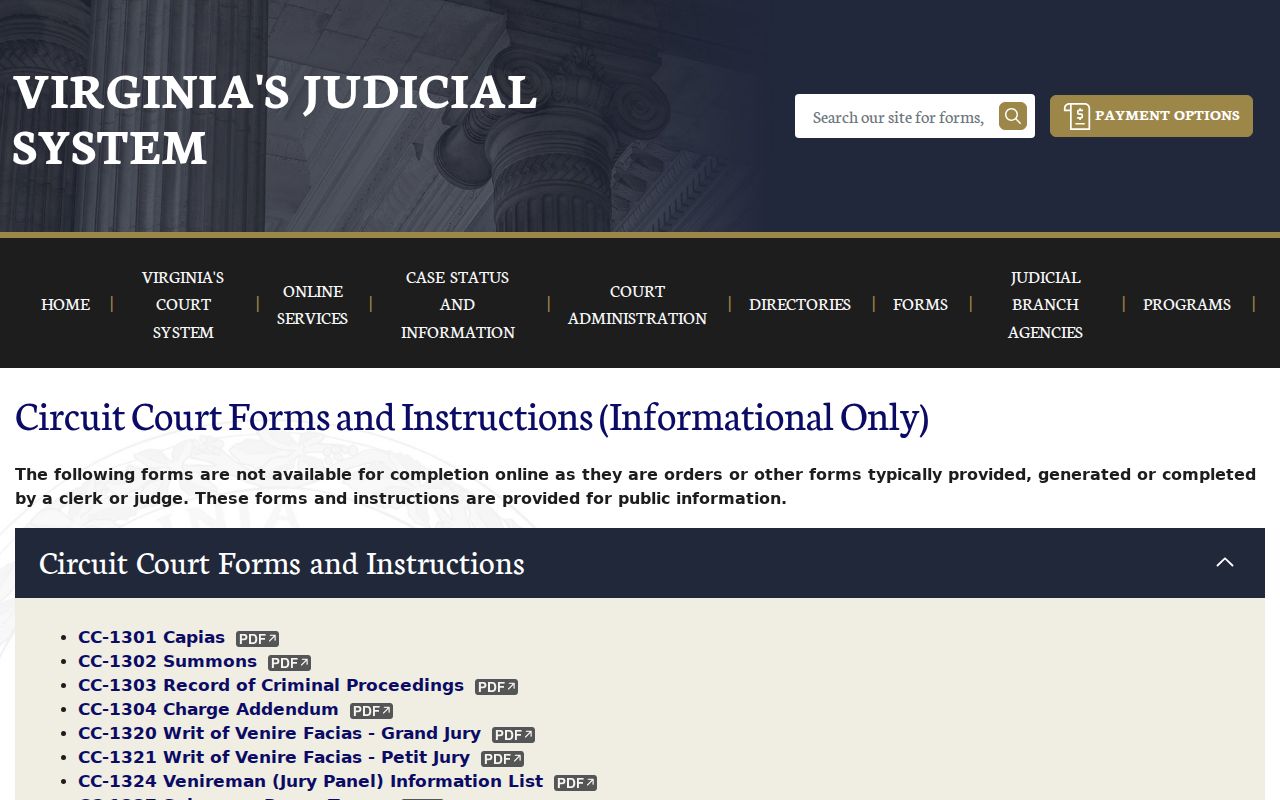
The statewide forms draw a line between state misdemeanors and local ones. DC-314 is the state misdemeanor form. DC-315 carries local misdemeanor information, and it can cite both a town ordinance and the matching Virginia Code section. That distinction matters. A Floyd County case that starts with a town ordinance may look different on paper than a straight state charge. Floyd County publishes no warrant serial format. Use the number printed on the actual case paper. The Virginia Circuit Court forms page also lists circuit capias forms, so you can match the document name in your case.
The clerk can tell you which form and court entry fit your case. A local label in Floyd County is not a separate warrant database.
How Warrants Get Served in Floyd County
The Floyd County Sheriff's Office handles local service of process. Virginia law lets authorized officers execute warrants within their jurisdiction. The officer then returns the execution details to a judicial officer. Floyd's public page names no warrant unit and no separate after-hours service line. After an arrest, the person goes before a magistrate or other proper authority for the next bail or court step. No local jail is named. No bond window or walk-in schedule appears either. Calling the sheriff before you appear is the best way to learn where and how service is handled in Floyd County.
Service Returns Go Back to Court
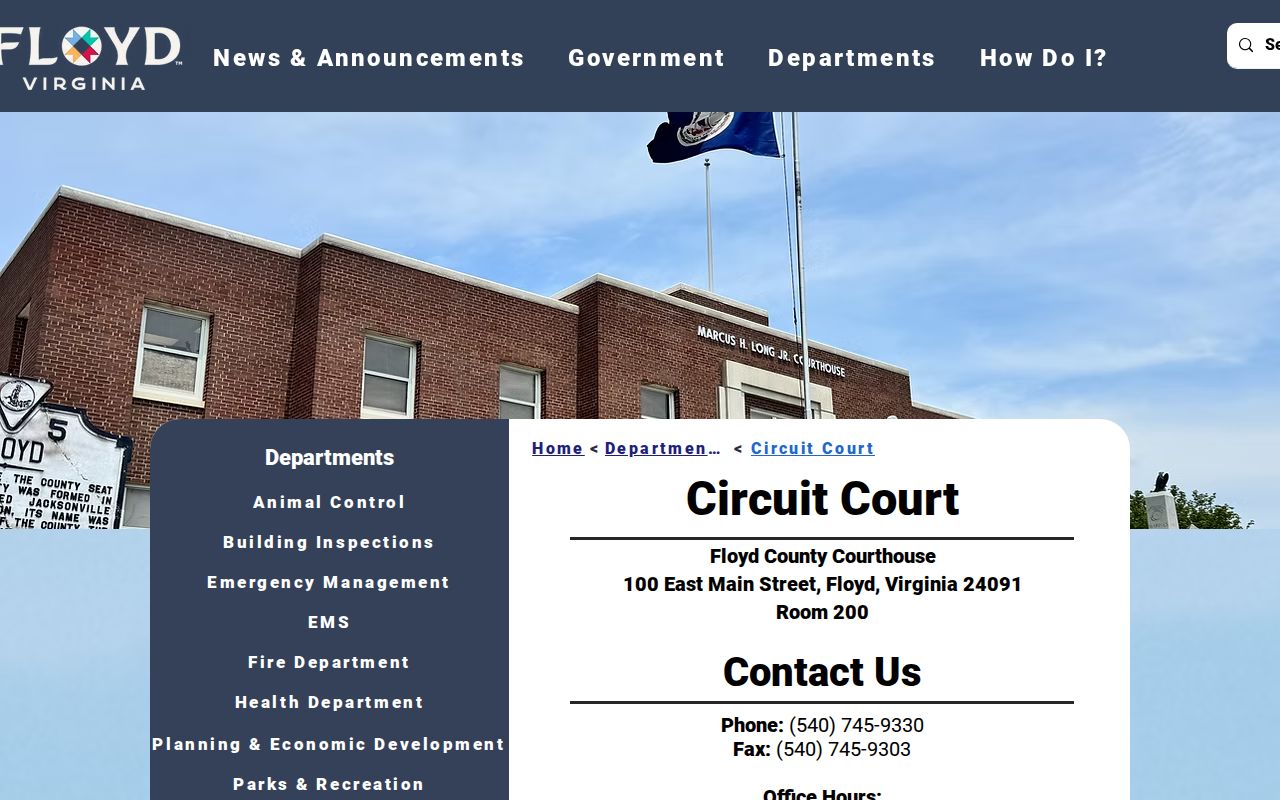
An arrest warrant is executed by an arrest. A summons is served by personal delivery. The serving officer notes when the process was executed and files a return with a judicial officer. That return is a separate record. It may not appear in the online case summary for the charge. The Floyd Circuit Court page gives the local court contact for circuit files, which is the clerk route for felony cases in Floyd County.
Try the combined clerk instead. In Floyd County, General District and JDR cases run through that office, while the sheriff answers service questions and the clerk checks the docket and return.
Arrest Warrants, Summonses, and Bench Warrants
The process type tells the officer what to do. An arrest warrant orders an arrest after probable-cause review. A summons directs a person to appear. A Floyd County bench warrant, or capias, follows a missed court date or other unmet obligation, and the case behind it calls for a different response.
| Feature | Arrest Warrant | Summons | Bench Warrant |
|---|---|---|---|
| Order | Officer arrests and brings person before court | Person appears at the stated date and court | Process responds to missed duty or order |
| Basis | Complaint and probable cause | Permitted process for a charge | Failure to appear or comply |
| Issuer | Magistrate or authorized judicial officer | Court or authorized officer | Judge or issuing court |
| Next step | Confirm counsel, service, and bail route | Attend as directed | Ask court about hearing or recall |
Search-Warrant Files Follow a Separate Rule
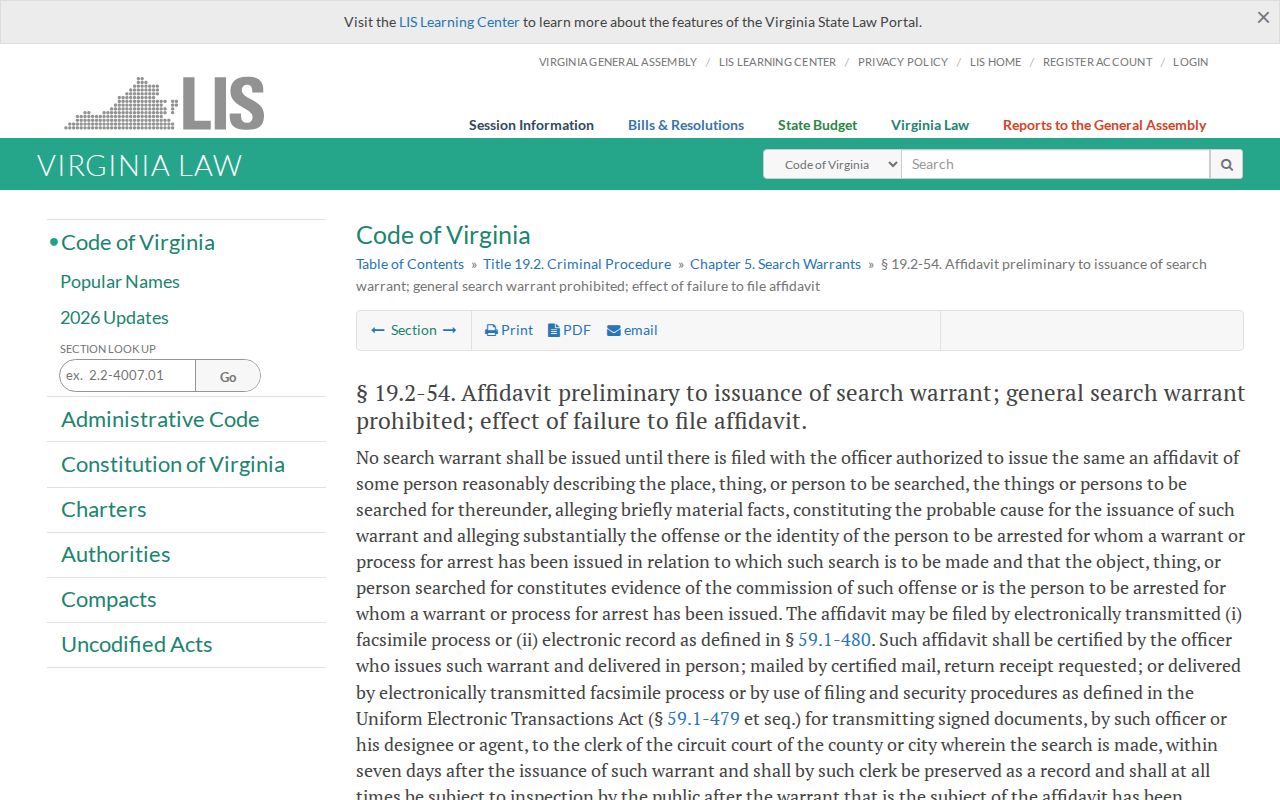
A search warrant authorizes a search. It is not a personal Floyd County arrest-warrant lookup. Virginia's General District Court manual says these warrants are not docketed in GDC at all. Instead, the affidavit is delivered to the Circuit clerk within seven days, and it generally becomes open after execution or 15 days, whichever comes first, unless the court seals it for good cause. A sealed affidavit or return may stay closed. The search-warrant affidavit statute sets out that filing and access rule in full.
Ask the Floyd County Circuit clerk about the affidavit and any sealing order. Expect nothing in a General District criminal search.
Handling an Arrest Warrant in Your Name
Call the clerk of the issuing court. Ask what the warrant covers, which court it returns to, and whether a hearing is set; also ask whether your lawyer can appear or file a motion. Then call the Floyd County sheriff. Ask how service or a voluntary appearance works. Floyd County publishes no surrender procedure, bond window, fixed schedule, or warrant-status letter fee. A lawyer can weigh a planned appearance or bond. The same lawyer can ask the court to recall or quash the warrant. A capias from a missed date runs a different route, and the issuing court controls it. Keep copies of everything, and ask for confirmation once the court acts.
Important: Speak with a Virginia lawyer before appearing. Confirm the court, service route, and bail instructions with official Floyd County offices.
Federal Process Uses Another Court
Federal process is different. A federal warrant is not a Floyd County court warrant. The Western District of Virginia U.S. Marshals office, based in Roanoke, lists a phone contact for federal fugitive questions. PACER covers federal dockets. Sealed complaints and warrants may not appear in public files, though. For a Floyd County state case, use the local clerk and sheriff instead. An empty county search tells you nothing about federal process or a case from another state.